Wednesday, July 13, 2011
Road Rage
Tuesday, June 28, 2011
Back to Basics
Wednesday, June 15, 2011
Saucy Seniors
Description of your service in 100 words or less:
Weirdest medical issue:
Friday, May 27, 2011
Sipan Stories
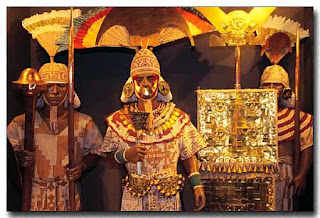
The story of the discovery and excavation of the tomb is a popular one around these parts. There is the version that exists in the “official” history of the region, and there are the versions that are passed from family to family. As you can imagine, the official history lacks some of the local color and flair I’ve come to expect from my Peruvian neighbors. I’ve been here long enough to listen with a heavy dose of skepticism, but after nearly two years piecing together the disparate bits, doing a little of my own research, and brushing up on archaeological vocabulary, I’m ready to take the story public.
Get ready – it’s a fascinating yarn of mystery, the supernatural, history, and international intrigue. And also one that’s surprisingly heartbreaking.
Seriously.
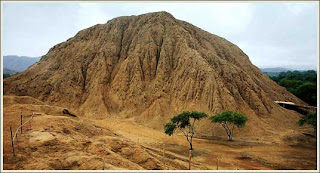
The Moches were dominant from around 100 AD to 800 AD, an impressive reign by all accounts. The surviving pyramids (the huacas for which my town is named) don’t look like much; they’re large, misshapen dirt mounds. Before the archaeologists descended, local residents didn’t know, or didn’t care, that they were valuable relics from the past. In the time of Spanish colonization, homesteads were built directly on the huacas. Weather, time and human destruction have taken their toll.

Beginning in the early 1980s, local residents began finding little gold statues or ceramics in the fields around the huacas. My host mom loves to tell a story of her kids bringing home huge hunks of turquoise they found in the mud after a particularly hard rainstorm. Every local family has stories of treasures found and lost again.
In the mid-1980s the Bernales family claims to have received a divine message directing them to the source of all these riches. Mr. Bernales, who coincidentally is a distant cousin of Papy’s family, told his friends and family that he’d dreamt of four donkeys pulling carts of gold from the mounds. He is said to have pressured Papy’s father to go on a late-night raid with him. Papy’s papy declined and the secret raid went ahead without him. The Bernales family racked up some serious loot, and they weren’t shy about telling people: supposedly their windowsills were decorated with gold statues. A local bigwig got wind of the fortune and alerted the authorities. According to my host family, a few months later, police stormed the Bernales residence, severely beat Mr. Bernales, and sacked all the loot. Mr. Bernales died in the car on the way to Chiclayo.
Shortly thereafter, in the spring of 1987, archaeologist Walter Alva discovered the warrior tomb, directly below where Bernales and friends first hit it big. The artifacts were hauled down in donkey-pulled carts. To this day, long-time residents of Huaca Rajada and Sipán scoff at Alva’s name, not believing he deserves the credit and fame for the discovery that cost one of their own his life.

It’s unfortunate to lose such valuable relics, and with them a window into the past. But what is perhaps more tragic is the daily reminder to the people of Sipán and Huaca Rajada of the narrow window of their future.
In the wake of the 1987 discovery Sipán landed on the international archaeology scene. And with the subsequent discoveries and the construction of the new site museum, there was a hope that the community could at long last capitalize on its rich history.
Unfortunately, the increasing numbers of tourists and high-profile visitors do little to change the economic realities in these towns. The museum employs very few local workers, choosing instead to bus in “experts” from Chiclayo, Trujillo or Lima. The excavation site is only open for part of the year, and the additional workers hired earn a pittance for their manual labor. None of the proceeds from the ticket sales are invested back into the town.
This certainly does not mean that there aren’t opportunities for improving relationships between the museum and the community. There are. I’ve been trying to facilitate those meetings for two years. But the river of mistrust runs deep around here. Damn the man!
Editor’s Note: I am not an expert on this issue, and it’s more complicated than one blog entry can tackle, but I do feel confident in expressing my opinion as someone who has lived here, among the people, every day for the past 22 months.
Monday, May 16, 2011
Like Lists
Instead, I've decided to share with you another list I've been working on:
Reasons I Like Peruvians:
- Their unwavering generosity;
- That no matter how many unexpected guests turn up at the dinner table, there’s somehow always enough food to go around;
- The women have a surprisingly raunchy sense of humor;
- They love to dance and do so completely unselfconsciously;
- They will tell you their life story immediately upon meeting you, which might be heartbreaking or heartwarming, but is always honest;
- Their lack of body image issues;
- And hand-in-hand with that, their rich culinary traditions;
- They love to throw a good party or tell a good story;
- That despite all the hardships they endure, they love to laugh – at themselves, at each other, at their country – and their humor is infectious;
- Because they welcome me into their homes as a friend, a sister, a daughter.
To me, Peru is like that kooky friend or aunt or cousin we all have. The one we roll our eyes at and laugh a little about, but who we secretly, passionately hope never changes because we love her for being exactly who she is with no apologies, and because when you break through the surface barriers and see the essence of the person (or place), it’s startlingly beautiful.
Monday, January 31, 2011
Summer Sundays
Sunday, December 26, 2010
Time Travel
“Time keeps on slipping into the future” – Steely Dan
Time has a funny quality here. There are days that seem endless and months that pass in mere minutes. I at once can’t believe I’ve lived in Peru for all of 2010 and also feel like I’ve been here much, much longer. There’s a sense of sameness in small towns like Huaca Rajada, a feeling that time is somewhat irrelevant. People come and go, easing in and out of our lives as they seek work in Chiclayo, Lima, or further afield, but they’re always welcomed back as if no time has passed at all. Conversations veer to the familiar – the weather, family members, the latest town gossip. One doesn’t have to be here every day to understand the cycles of the seasons or the small family dramas that play out similarly in households around the world.
We tell time by the cars leaving for Chiclayo. It’s time for lunch with the “Rápido” (even after 16 months, I have no idea why this particular car is so named, they all seem equally slow to me) lumbers down the dirt road, Chiclayo-bound. I know it’s Saturday because Jackey (my other host sister) and her son come spend the day with us. Otherwise there is little difference between a Monday and a Thursday, or a Tuesday and a Sunday; the days blend together in a lulling rhythm broken only by the occasional campo baile.
When I return to site after a week or two of travel, I’m always a little worried that my artisans or family will have had some important meeting or participated in some big event without me. But every time I come back, they greet me as if I’ve always been here. As if my absence was a fleeting second. Sure, there’s a little friendly guilt-tripping – “Jessica, it’s been years,” they say. But I get this snarky retort whether I’ve been gone two days or two weeks. No, they respond, nothing new is going on here, nothing new to report. “Aqui estamos,” they reply day after day.
In many ways this blasé attitude toward the future is incredibly frustrating. It’s hard to motivate people to work when they are convinced that this is their lot in life and little they do will ever change their situation. Granted, there are a few incredibly motivated people in my town, but two or three people, mighty as they are, can’t carry an entire population forward. So from a development standpoint, time works against me.
But on a personal level, it’s been comforting to realize that I’ve woven myself into the fabric of this town, of it’s unique pace and personality. I don’t know when it happened, but one day I suddenly knew the combi schedule, I could predict what was for lunch based on the weather. It’s odd to find yourself at home in a place that once seemed so remote and alien. Time has a way of making everything eventually familiar.
Sometimes I wonder if they’ll remember me when I come back to visit in five, ten, or twenty years. I can’t answer for sure, but I have a sneaking suspicion that I’ll find the same women gossiping in the shade of the algarroba tree, and they’ll welcome me back into their folds as if no time has passed at all. As if I’ve always been here.
I hope you are all enjoying a wonderful holiday season, wherever you are!
Friday, December 3, 2010
Dancing with the Dead
There is something quite beautiful and moving in honoring your departed loved ones in this way. I’d noticed it in passing before, but over the past few weeks I’ve spent a decidedly un-morbid amount of time in and around Peruvian cemeteries.
A few weeks ago, for Day of the Dead, I spent an entire day in the cemetery with my host family. We packed a big lunch and camped out for the day. There were families visiting almost every grave, enjoying their own picnics and paying their respects to deceased parents, grandparents, spouses and friends. Kids were laughing and squealing in the background, making dirt pies to sell to the adults. The ice cream vendor made a killing (pun intended) selling sweet treats to the sweaty revelers. Instead of a somber event, it was a happy day punctuated by chatter and sweet rememberances. It was a time for family and friends to share meals and memories. Obviously I don’t have a personal connection with any of the deceased relatives so it’s easy for me to gloss over any sadness, but in talking with my host family and observing the day, I really don’t think it’s a time for sadness. The dead aren’t honored here by crying over our losses, we honor their memories by spending time as a family, united in a shared love for someone no longer here.
A couple weeks later, Papy’s sister died. She’d been sick for a long time so it was no big shock, but it’s always sad to lose someone. What followed was a whirlwind of familial activities: a wake, a funeral precession, a burial ceremony, a post-burial ceremony, and lots and lots of shared meals. I was present for it all -- what’s a family event without the token gringita, after all? Sure there were some awkward moments, namely walking behind the coffin, standing heads above the rest of the mourners, throwing flower petals as we marched through the streets. More than one person stage whispered, “who is that white girl?” But overall it was a time for family and I was welcomed, as always, with open arms. The generosity of the Peruvians I know is boundless. Amid their sadness they found the kindness and love to feed me, include me in the rituals and ceremonies, and talk to me. The whole three-day affair was marked less by sadness and more by joyous moments of family love. It was unexpectedly moving for me. Once again I find myself overwhelmed with gratitude for being able to be a part of these private moments.
For all its hardships and loneliness, Peace Corps really does offer us this incredible opportunity to live in another culture, with all the joy and pain that brings.
Tuesday, November 16, 2010
Swanky Soiree
First, everyone must sit awkwardly against the wall in a giant circle. There's no dancing, not much talking, just a lot of sitting and waiting.
Waiting for what, you might ask. For the beer to come out, duh. Here, Papy (far left, proudly wearing his Carolina hat!) and company demonstrate the practiced art of nonchalantly scoping the crowd while passing cervezas around the circle.
These ladies are old-hands. They know the drill: a little waiting, a little lunching, a lot of dancing. One of the best things about Peruvian parties is the fact that, eventually, everyone will be on the dance floor. There are no age limits on fun here.
Next, we see what I like to call the "early adopters." These are the first people on the dance floor. They hear a favorite song and they're ready to cut loose. They don't mind that the majority of the crowd is still awkwardly balancing their paper plate of rice and beans on their laps.
Here, the early adopters are joined by the crowd at large after the band calls them to the front to listen to the mayor's acceptance/thank you speech.
You can't keep them off the dance floor at this point. The band is pumping out one hit after another. The beer is flowing. The sun is setting. The party has officially (four hours later) started.
The true mark of success -- getting the gringa to dance in your cirlce. Here I demonstrate how to two-step your way to popularity. Clearly my dance partner is impressed.
The truly amazing thing is that every single party I've been to follows this exact same format. Even the meals are the same. At least I always know what to expect, and at this point, I am more than happy to join in on all the fun.
Here's hoping you're enjoying your own special dance party!
Wednesday, November 10, 2010
Pisco & Peanuts
I found myself today with some unanticipated Internet time, thus I spent my time as any lonely foreigner would do -- partaking in some good old-fashioned Internet stalking. Perusing some of my favorite blogs (and lurking creepily around on strangers' blogs), I realized my own blogging is a bit wan. Sure, it's hard to stay on top of an Internet-based journal when you live in a town with NO Internet access, but still, I feel like there's so much I want to say and should have said to document this crazy experience. Although if you've read any of the previous entries you can certainly attest to the difficulty with which I summarize or succinctly relate my Peruvian life. What can I say? I'm wordy. Hence, the roundabout introduction to what I can only call a random update.
My first couple weeks back in site after my Charleston trip were kind of rough, I'm not gonna lie. It's hard to go from constant activity and everyone wanting to talk to you and see you to being alone in the middle of a Peruvian desert town. But I'm happy to report I've gotten over myself and am back to loving Peru. There's something about Peruvians that just won't let you feel sorry for yourself for long. For one thing, they are hilarious in a completely unintentional way. They're also incredibly generous and welcoming.
Case in point: I was sitting this afternoon in an unassuming restaurant, working on my laptop, and ended up engaged in a nearly three-hour conversation with the owner (my Pisco purveyor). We chatted about everything from weather to politics to Hollywood stars. When he found out why I was living in Peru, he called over the other waiters to share some Pisco in honor of me and my selflessness. Ha. If they only knew how much more I am getting/learning from nearly every Peruvian I meet. Honestly, their openness and generosity touches me when I need it most. Quality people.
Besides swilling Pisco with locals, I've been steadily working on some projects in site. My artisans and I recently participated in the annual U.S. Embassy-sponsored artisan fair in Lima. I traveled with Maria and Papy for the two-day event. Papy is a Peace Corps veteran these days. He has literally been to every PC-sponsored training event that exists in the past 18 months. He loves it. He introduces himself to other Peruvians as a Peace Corps employee. I overheard him coaching Maria (who had never been to a PC event) on what to expect, pointing out who's who of the staff, and generally acting the consummate pro. It was ridiculous and endearing. This year's fair was a smaller than last year's, so we didn't sell as much as I'd hoped, but it was still a good experience for the Bad News Bears from Huaca Rajada. Poco a poco.
Up next: continuing with my community bank and HIV/AIDS work (two separate projects), traveling to Arequipa for Thanksgiving, studying Portuguese (I've decided it's time I learn a third language), and counting the days until I'm back in the US of A for Christmas (yes, I love Peru, but nothing says holidays like home). Hasta pronto amigos!
Sunday, October 3, 2010
Work Week
The past few weeks have seen me enjoying the following activities: a super swanky, super professional gastronomic fair in Lima. I accompanied my crazy artisan friend who somehow scored an invite to display her algarrobina products, representing our department. We were so the campesinas at this thing. MISTURA, as it was called, makes the Charleston Food & Wine Fest look downright redneck. Seriously. There were apparently 40,000 visitors on day one, and chefs from all over the world. Maria and I were both a little overwhelmed, but we put on a brave front and ate our way through the next four days. And, on an exciting note, she sold all of the algarrobina she brought -- nearly S/. 2000 soles worth. It was a big deal for us, but I'm sure there were vendors there who were selling well into the tens of thousands.
Editor's note: I wrote this post before my American extravaganza, and I can't help but to leave that last paragraph in, mainly because it proved to be almost exactly true (Mom sprung for me to get my hair cut before the wedding festivities). I'll post a post-America post soon.
Thursday, July 1, 2010
Still Standing
That’s the abridged version of what’s been going on with me, at least internally. I’m happy to say that I’m feeling much more positive about my situation. I have a few small pilot projects in the works that seem promising, which I won’t go into detail about for fear of jinxing them. I continue to build and strengthen a few meaningful relationships with people in my town, relationships that, at the end of the day (or two years), will do more to define my time here than any project I could hope to develop.
I am also so lucky to have my host family, who puts up with my unpredictable stomach and/or appetite, who leaves me alone to read for hours in my room but somehow intuits when I need company, who invites me everywhere and who has opened my eyes to a whole new dimension of generosity. And what would this whole experience be without my hilariously witty and insightful volunteer pals? They remind me that anything can be dealt with if you just laugh at it and inspire me to “just keep swimming.”
AND…drum roll…I’ve made it a YEAR! Yep, June 6th marked the one-year anniversary of my arrival in Peru. Sometimes I feel like I’ve been here forever and sometimes it seems like mere weeks. It’s been a whirlwind year. I’ve lived through more once-in-a-lifetime experiences than I though was possible, some of which I’ll be glad never to repeat – namely that 18-hour canoe ride. I wish I had some clever turn of phrase to summarize this year, but so far this experience has proven impossible to summarize or neatly package. Suffice to say it’s been a year of contradictions and a year of learning. I’m looking forward to seeing what the next year brings; hopefully plenty more blog material at the very least. But for now, I’ll just say that I’m proud to have made it this far, still standing.
Happy July 4th weekend!